
Look up at where your walls meet the ceiling. In most Melbourne homes, you’ll see one of two things: a cornice running around the edge of the room, or a crisp, clean corner with nothing there at all. That second one is a square set finish. It seems like a small detail, but it changes how a room feels. Square set reads modern, minimal and architectural. Cornices can be anything from a simple cove to an elaborate Victorian profile that defines the whole character of a room. Choosing between them affects your budget, how much prep the walls need, how well the finish handles movement, and whether the result suits your home. At Plaster Wizards, we’ve spent 27 years doing both across Melbourne, from period terraces to architect-designed new builds. This guide covers the honest pros and cons, so you can pick the finish that’s right for your home and your rooms.
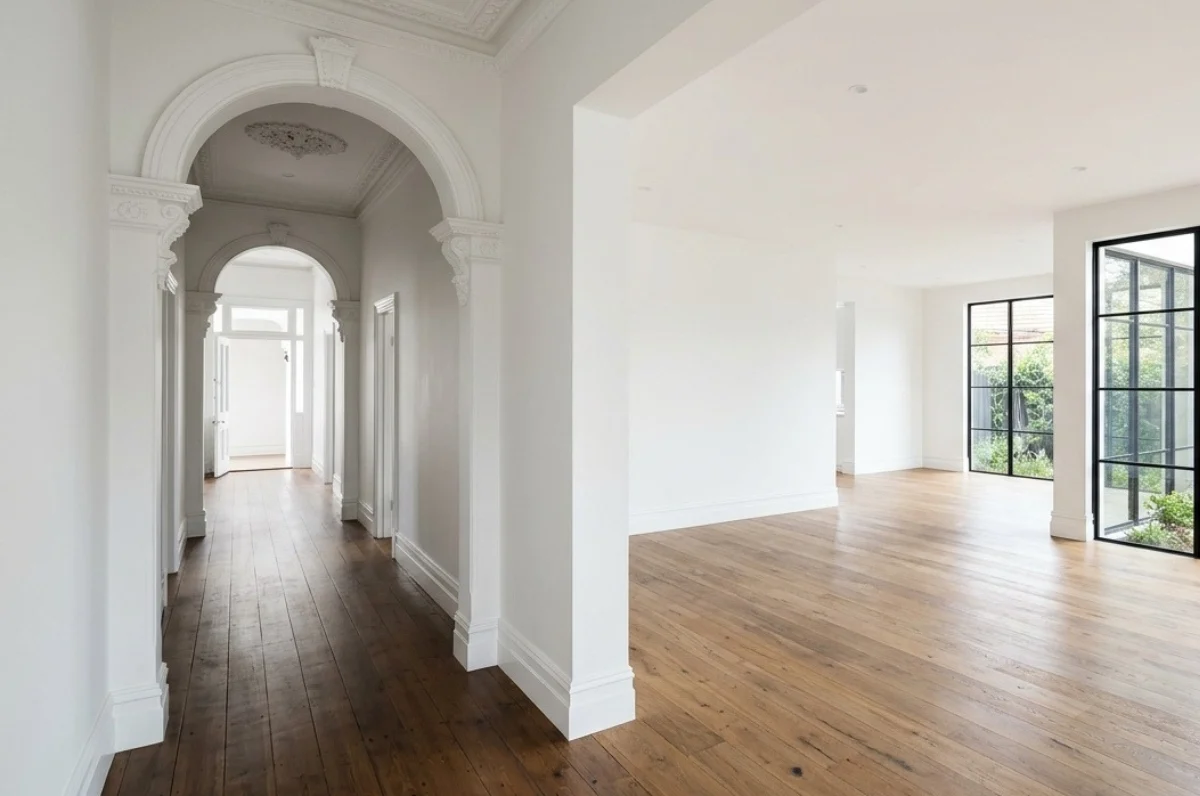
Square set vs cornice: which finish suits your Melbourne home
Here’s the short version:
- Choose square set if you want a clean, contemporary look, you’re building new or doing a full renovation, and your walls and ceilings can be made straight and true.
- Choose a cornice if your home is a period property, the walls and ceilings aren’t perfectly straight, you want to soften the junction, or you’re matching existing detail.
- Consider both if you have a period home with a modern extension. A cornice in the original rooms and square set in the new space is one of the most common, and best-looking, approaches in Melbourne.
Neither is better in every situation. The right answer depends on your home’s era, the condition of the frame, the rooms involved and the look you’re after.
What a square set finish actually is, and how it’s built
A square set finish is where the wall and ceiling meet at a sharp, clean 90-degree internal corner, with no cornice covering the join.
It looks simple, which is exactly why it’s demanding. There’s nothing hiding the junction, so every imperfection shows.
A typical square set involves:
- Straight, true framing. Walls and ceilings need to be flat and aligned, so the frame is checked and packed out where needed.
- Careful sheeting. Plasterboard is fixed so the wall and ceiling sheets meet cleanly at the corner.
- Corner reinforcement. Tape or trims are used to create a crisp, strong internal corner.
- Multiple coats of setting. Compound is applied in layers, with drying time between each.
- Precise sanding. The corner and surrounding surfaces are sanded smooth and straight.
Variations on square set:
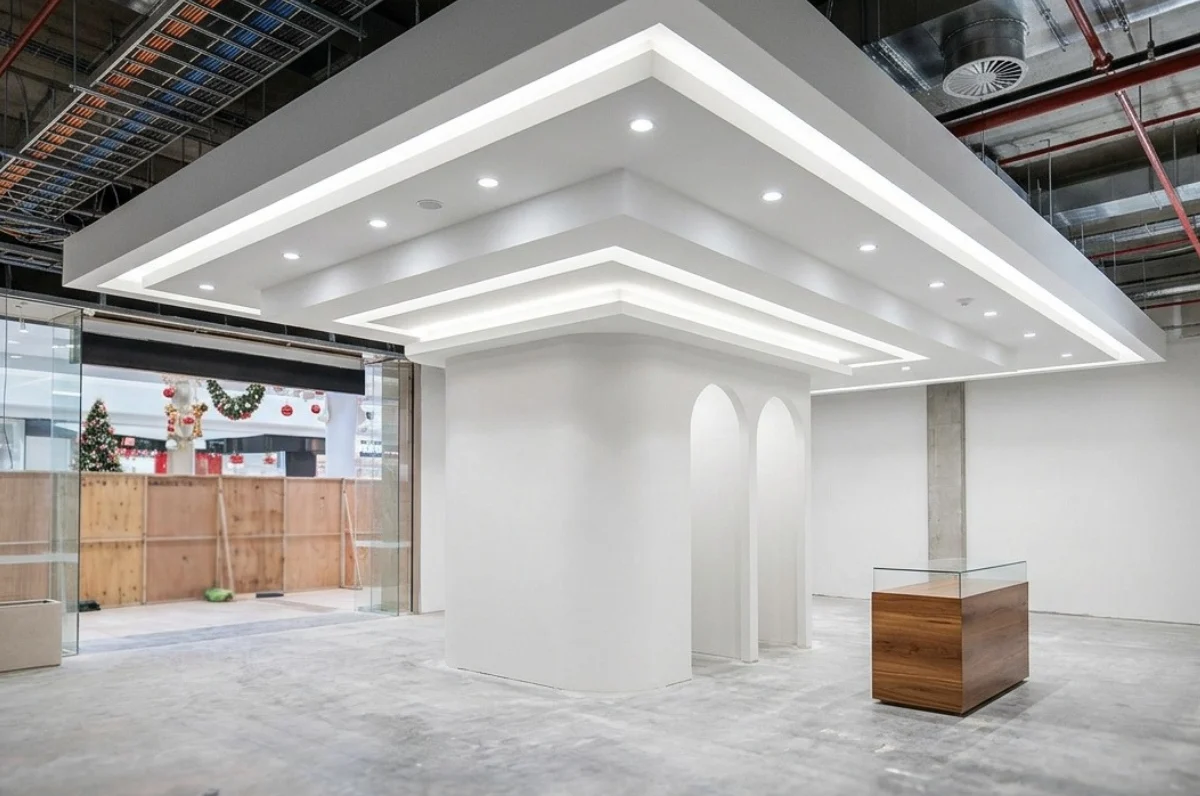
- Shadowline ceilings, where a small recessed gap separates wall and ceiling, creating a floating effect
- Square set with shadowline skirting for a fully minimal look from floor to ceiling
- Square set bulkheads and light troughs in architectural homes
Because the finish is so exposed, low-angle light from windows or downlights will reveal any waviness. That’s why preparation matters more than anything else.
What cornices offer, from plain coves to ornate period detail
A cornice is a moulded profile installed where the wall meets the ceiling. It covers the joint, adds a finished edge and can bring a lot of character to a room.
Cornices range widely:
- Plain cove cornices – The simple curved profile found in many post-war and modern Melbourne homes. Clean, practical and affordable.
- Modern and contemporary profiles – Stepped, angular or slim designs that add a subtle detail without looking traditional.
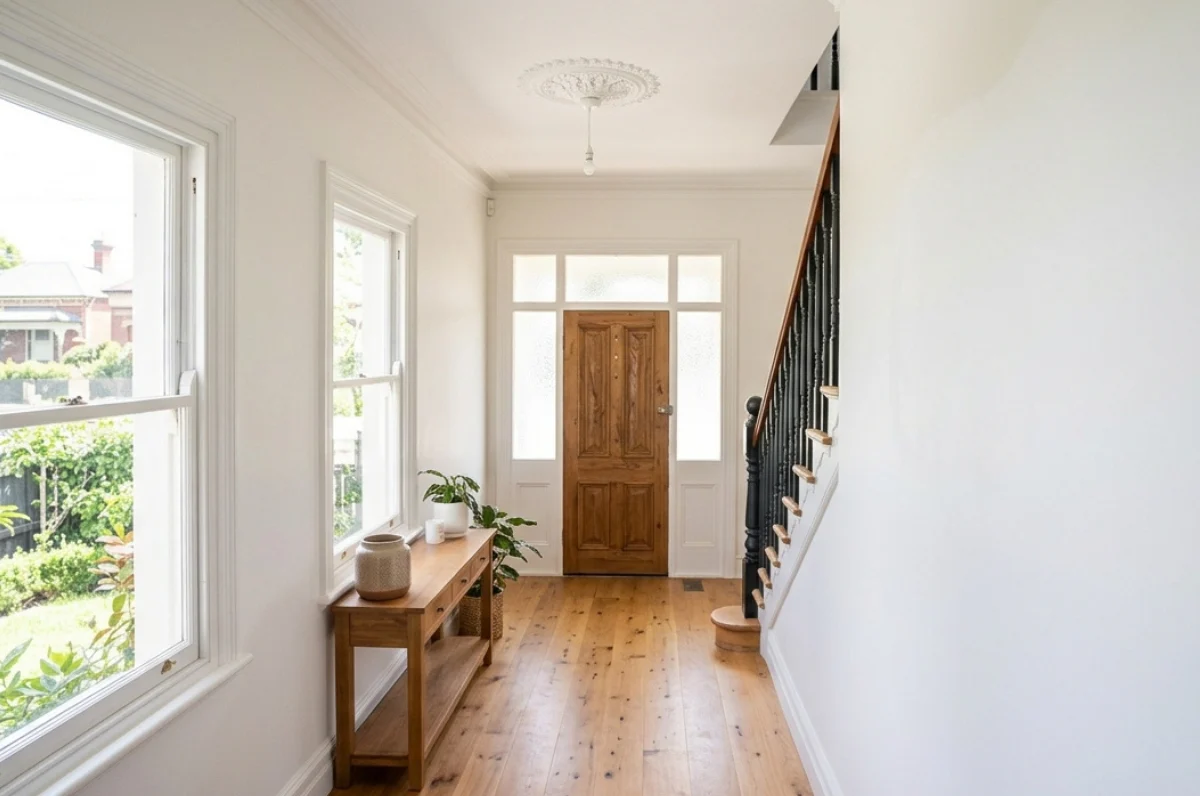
- Decorative period cornices – Victorian and Edwardian homes often feature elaborate cornices with layered profiles, patterns and ornamentation, sometimes paired with ceiling roses and arches.
- Interwar and Art Deco profiles – Geometric or stepped designs common in Californian bungalows and 1930s homes.
What cornices do well:
- Hide imperfections at the wall and ceiling junction
- Handle movement better, because they bridge the joint rather than exposing it
- Add character and visual interest, especially in larger rooms with high ceilings
- Suit period homes and help new work blend with original detail
Square set vs cornice: the honest comparison
The trade-off in one line: square set gives you a cleaner look but demands more from the frame and the plasterer. A cornice is more forgiving and adds character, but changes the style of the room.
Matching the finish to your home’s era and style
Melbourne’s housing covers more than a century of building styles, and the right finish often comes down to respecting what’s already there.
- Victorian and Edwardian homes – These homes typically have decorative cornices, ceiling roses and high ceilings. Replacing original detail with square set can strip out the character that makes them special. In most cases, repairing or matching the original cornice is the better choice. If your home is in a heritage overlay, check with your council before changing original features.
- Californian bungalows and interwar homes – Often feature simpler or geometric cornices. Matching these profiles keeps the home consistent and authentic.
- Post-war and mid-century homes – Usually have plain cove cornices. Swapping to square set during a renovation can give these homes a fresh, modern feel, but it needs straight walls and ceilings to work.
- Contemporary and architectural homes – Square set and shadowline details suit clean, minimal design. Architects often specify square set for its crisp lines and uninterrupted surfaces.
- Period homes with modern extensions – A popular Melbourne approach: keep or match the original cornices in the front rooms, and use square set in the new extension. It clearly separates old and new while respecting both.
Cost and installation: what each finish involves
We haven’t included set prices here because every home is different, but the cost drivers are clear.
Square set cost drivers:
- Time spent checking and straightening the frame
- Extra setting coats and drying time
- Detailed sanding and finishing
- Shadowline trims or special detailing where specified
- The condition of existing walls and ceilings in a renovation
Square set is usually more labour-intensive than a plain cornice, because the finish depends entirely on the plasterer’s skill and patience.
Cornice cost drivers:
- The profile chosen (plain cove versus decorative)
- The length of cornice needed
- The number of corners and mitres
- Whether a period profile needs to be matched or reproduced
- Removal and disposal of damaged cornices
Plain cornices are generally quicker to install. Ornate period cornices, especially custom-matched profiles, take more time and skill.
Tip: In a renovation, ask whether your existing walls and ceilings are straight enough for square set. If they need extensive packing or re-sheeting, that work belongs in the quote from the start.
Which rooms suit square set, and which suit a cornice
The best homes often use both, chosen room by room.
Rooms that suit square set:
- Open-plan kitchens and living areas, where clean lines suit modern design
- Extensions, especially in contemporary styles
- Bathrooms and ensuites, for a minimal, streamlined look
- Hallways and stairwells in architectural homes
- Rooms with feature lighting, light troughs or shadowline detail
Rooms that suit a cornice:
- Formal front rooms in period homes, where the cornice is part of the original character
- Bedrooms in older homes, where walls may not be perfectly straight
- Rooms with high ceilings, where a decorative profile adds proportion
- Any room matching existing detail, so new work blends in
Consistency matters. Mixing finishes within the same zone of a home can look disjointed. Switching at a clear transition, such as where the original house meets the extension, usually works best.
The mistakes that show up in a bad square set or cornice job
Both finishes look great when done well. When done poorly, the problems are hard to miss.
Common square set mistakes:
- Square setting crooked walls. Without straightening the frame first, the corner looks wavy, especially in raking light.
- Cracked internal corners. Usually caused by poor reinforcement, frame movement or rushing the setting.
- Uneven lines. A corner that wanders instead of running dead straight.
- Visible sanding marks that show up under downlights.
- Choosing square set for the wrong home. In an old, moving house, it may crack repeatedly.
Common cornice mistakes:
- Gaps at the top or bottom from poor fixing or uneven walls.
- Messy mitres where corners don’t meet cleanly.
- Mismatched profiles in renovations, where new cornice clearly differs from original.
- Removing original period detail that can’t easily be replaced.
- Visible joins along long runs.
- Paint filling decorative detail, softening the profile.
Most of these come down to rushing or treating the finish as an afterthought. A good plasterer plans the finish from the frame up.
Getting square set and cornicing done properly in Melbourne
Square set and cornices are both excellent finishes. The right choice depends on your home’s era, the condition of your walls and ceilings, the room and the look you want.
To recap:
- Square set gives a crisp, contemporary finish but needs straight, true framing and skilled setting.
- Cornices are more forgiving, hide movement better and suit period homes.
- Victorian and Edwardian homes usually benefit from keeping or matching original cornices.
- Contemporary homes and extensions often suit square set or shadowline detail.
- Many Melbourne homes use both, switching at a clear transition between old and new.
- Bad workmanship, not the finish itself, is usually what causes cracks, gaps and wavy lines.
At Plaster Wizards, we handle square set, shadowline detailing and cornicing across Melbourne, from simple coves to matching period cornices that haven’t been made in decades. We’ll check your walls and ceilings, give you an honest recommendation and tell you upfront what it takes to get it right.
Call Nik on 0411 479 330 for a free quote, or send photos and plans through our quote form. You’ll get a straight answer on which finish suits your home and what it costs to do it properly.






Leave A Comment